
Building psychosocially safe workplaces
Practical, tailored training that builds confidence in how your leaders and staff respond to psychosocial risks, and supports you to meet your obligations in a way that actually works.

 about us
We translate psychosocial WHS obligations into practical capability.
Rubric Education Institute helps organisations build the capability of their people and turn psychosocial safety responsibilities into practical, workable approaches. We work with organisations carrying the weight of new psychosocial Work Health and Safety obligations, and with the workforces where those obligations translate into daily interactions with residents, clients, and colleagues.
More about us15+ years
Clinical and workforce capability experience
WorkSafe-aligned
Psychosocial hazard categories
Beyond compliance
Practical strategies to align with new legislation
Fully qualified
MSocSci · BAppSc Psych (Hons) · Dip VET · Cert IV TAE
regulation change
Why Now?
Victoria's Occupational Health and Safety (Psychological Health) Regulations have been in force since 1 December 2025. Every state and territory has now adopted psychosocial hazard obligations. This isn't future legislation; it's law your business is already accountable to.
Mental health claims are up 37% on a five-year view and take 5× longer to recover from than physical injuries. Cumulative exposure means the harm done today often surfaces as claims months or years later.
Under the regulations, policies alone don't satisfy the obligation. Higher-order controls do: workforce capability, job design, leader behaviour.


This isn't a paper obligation. For people-intensive workforces, the cost of not acting is concrete: rising WorkCover claims, leadership fatigue, and the kind of staff turnover that eats years of accumulated capability.
The longer the controls are delayed, the larger the claims pipeline builds.
Getting in front of the shift protects your people, your regulatory position, and the leaders carrying the weight of every late response.
Rubric's job is to make sure the adaptation is practical, not paperwork.
is this for me?
If you have a workforce, this is for you
A common assumption is that psychosocial safety regulations are aimed at big corporates with HR departments. That's not how the legislation works. Every Australian employer carries the same obligation, regardless of size or sector. A claim from a worker doesn't care how many employees you have.
I.
Every business size
Rubric works with businesses of 5, businesses of 500, and businesses of 5,000. The depth of the engagement scales. The underlying obligations don't.
II.
Every industry
Psychosocial risk shows up wherever people work with people. The underlying mechanism is consistent across sectors.
Where's the psychosocial risk in your business?
A 10-minute diagnostic that maps psychosocial risk in your workplace and tells you what to do about it.
Five screener questions across the priority hazards regulators most often flag: poor supervisor support, bullying, organisational change, organisational justice, and aggression or violence. Where signals appear, the tool runs targeted follow-ups. Where they don't, it skips the deep dive.
When you're done you'll get:
- A colour-coded heatmap across all five hazards
- Your top three priorities, ranked, with the compounding effects between them called out
- A plain-English action plan for each, written to be acted on Tuesday morning, not filed for the audit
Built by Kelly Quirk. For business owners, operations leads, and HR managers who want a clear picture before booking a conversation.
 the gap
Where existing training falls short
I.
Generic WHS training
Covers the law. Leaves your leaders' conversations unchanged.
II.
Vague risk surveys
Can tell you what your hazards are, but don't tell you what to do about them on Tuesday morning.
III.
Academic courses
Build theoretic understanding, but don't change what happens on the floor.
 our approach
The practical groundwork most providers skip
Most providers start with training. We start before that, with the practical groundwork that makes training stick. Risk mapping, simple controls, leader confidence, audit-ready evidence. Then we train.
Map the risks
We identify where psychosocial risk actually sits in your day-to-day workflow, not where the policy says it should.
Put simple controls in place
A handful of light-touch controls in the right places. Designed to stand up to audit without turning your workplace into a compliance bureaucracy.
Build leader confidence
Equip your supervisors to recognise psychosocial issues early and respond without making them worse. The single highest-leverage shift.
Create audit-ready evidence
A short policy and a simple checklist that show you've thought about this seriously, ready to put in front of any inspector.
Train the workforce
Cohort-based education sessions that build practical capability with the people doing the work.
Build resilience that lasts
A workforce that recognises pressure early, raises issues before they escalate, and recovers faster when things slip.
I've spent 15 years watching workplace harm become clinical presentations in my consulting room. Psychosocial safety isn't a policy question. It's a workforce question.
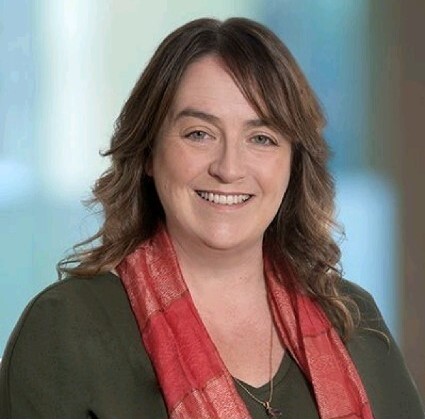 about kelly
Practitioner, educator, founder.
Kelly Quirk brings together a unique combination of psychology, education and real-world leadership experience to support organisations in managing psychosocial risks.
With over 15 years in education across vocational and tertiary sectors, and a strong clinical background, she understands both the clinical foundations and the practical realities of workplace environments.
Kelly is passionate about helping organisations identify and respond to psychosocial risks in a way that is practical, respectful and sustainable. She is known for making complex requirements simple and actionable, with a focus on early identification of risk, having the right conversations, and supporting teams to respond with confidence.
inside the training
Inside a Rubric engagement
A staged engagement that takes your organisation from initial insight to embedded change. Flexible to fit small businesses or large corporates.
I.
Diagnostic baseline
A structured conversation with your leaders to map current hazards, existing controls, and emerging risks. Sets the starting point.
II.
Tailored workshops
Sessions built around your diagnostic and customised by cohort (leaders or frontline). Focused on practical risk identification, the conversations that matter, and strategies your team can use immediately.
III.
Mid-program check-in
We reconnect mid-way to see what's landing and what isn't, then adapt in real time.
IV.
Six-week follow-up
A progress check to reinforce key concepts and support your team as new practices embed.
V.
Annual review or refresher
An annual revisit to review changes in risk, update training, and keep capability current.
 faqs
faqs
Frequently asked questions
How work is designed, managed, and experienced, and how that affects mental health. It covers things like workload, role clarity, leadership style, exposure to distressing situations, and workplace relationships.
Untreated psychosocial risk shows up in turnover, absenteeism, conflict, and dropping performance. WHS obligations also require you to identify and manage these risks. Acting early reduces harm, claims, and disruption later.
You can, and many teams already are. The challenge is stepping back to assess risk objectively when you're inside the operation. We come in to review what's there, strengthen what's missing, and build the capability across your team so it sticks once we leave.
Yes. We align to psychosocial WHS requirements but focus on making the work practical, not compliance-heavy. The aim is meeting your obligations in a way that holds up day-to-day, not just on paper.
Two consequences. The regulatory side: scrutiny, penalties, and exposure to workplace claims. The human side, which usually shows up first: preventable harm to staff, absenteeism, and the slow erosion of workforce capability. Acting early heads off both.
We focus on practical application, not theory or fear-based compliance. The clinical and educational background means we help people identify risk, have the right conversations, and respond in ways that are both safe and realistic.
A staged approach: diagnostic, tailored workshops, mid-program check-in, six-week follow-up, and an annual refresher. Each step has a specific purpose.
Yes. Workshops are built around your specific risk profile and context, and tailored for different cohorts (leaders vs frontline).
Both. We combine training with practical implementation support so the work doesn't stop at knowledge transfer. Your team has to apply it in real situations, and that's where we stay involved.
No. We scale across business sizes from small teams to large corporates. The underlying principles stay the same; the application is shaped to your context and resources.
Every industry. The mechanism of psychosocial risk is consistent across sectors; what changes is how it surfaces day-to-day.
Book a 30-minute conversation. We'll talk through your context, what's prompting the inquiry, and what you're looking to achieve. From there we'll recommend a tailored approach.
get in touch
Contact us today
Book a 30-minute diagnostic conversation with Kelly. We'll talk through your context, what's prompting you to look into psychosocial capability, and where to start. You leave with one concrete recommendation.